by OCNJ Local
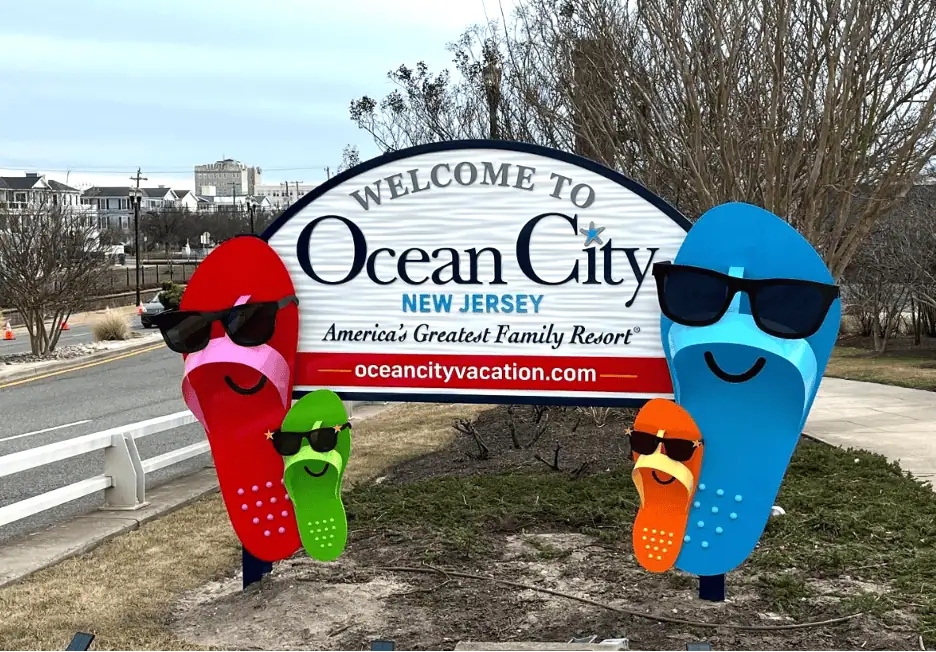
It’s a bold, superlative-heavy claim printed on every colorful beach tag, embossed on every city trash can, and proudly displayed on the welcome signs at the 9th Street and 34th Street bridges. But where did Ocean City’s famous tagline come from? In a world of digital marketing campaigns and “rebranding” efforts, Ocean City, New Jersey, has clung to four words for over a century: “America’s Greatest Family Resort.” It is more than a marketing gimmick; it is the constitutional foundation of the island’s identity.
The Marketing of the 1920s: A Strategic Divide
To understand the origin of the slogan, one must examine the competitive landscape along New Jersey’s coastline in the early 20th century. By the 1920s, the “Shore” was booming. To the north stood Atlantic City, a burgeoning metropolis of neon, nightlife, gambling, and “speakeasies.” Atlantic City was the “World’s Playground,” a brand built on excitement and adult entertainment.
The leaders of Ocean City realized they could not, and did not want to, compete with that brand. Instead, they leaned into the vision of their Methodist founders. While other towns were modernizing and relaxing social codes, Ocean City doubled down on its reputation for sobriety and morality. The slogan “America’s Greatest Family Resort” emerged from a calculated effort to position the island as the wholesome alternative. It signaled to parents across the Tri-State area that Ocean City was a place where they wouldn’t have to worry about their children seeing things they shouldn’t.
Defining “Family”: More Than Just a Word
In Ocean City, the word “family” in the slogan has always carried specific weight. Most notably, it reinforced and protected the town’s “dry” status. By branding itself the ultimate family destination, the city built a strong case against introducing alcohol. The logic was simple: alcohol leads to bars, bars lead to nightlife, and nightlife is incompatible with the “family” brand.
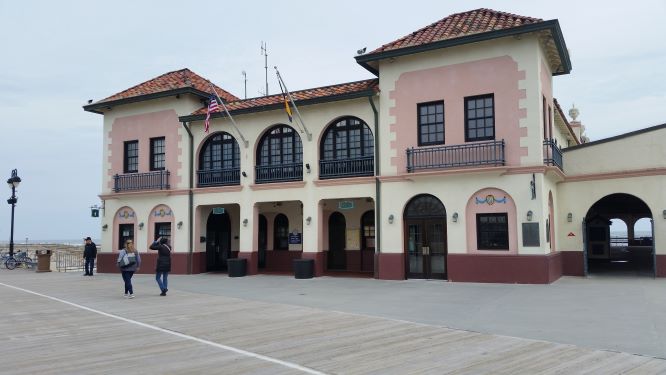
This commitment to the slogan extended to the city’s entertainment. From the construction of the Music Pier in 1928 to the establishment of the Ocean City Pops, the city’s events were curated to be “clean.” The slogan served as a filter for every civic decision. If an attraction or event didn’t fit the “family” mold, it simply didn’t happen on the island. This consistency fostered a sense of trust among visitors that spanned generations.
Brand Consistency: A Century Without Change
One of the most remarkable aspects of “America’s Greatest Family Resort” is its longevity. In American advertising history, very few slogans last more than a decade. Market researchers often advise brands to “refresh” their image to stay relevant to younger generations. Yet Ocean City has never blinked.
The city has never changed its slogan in over 100 years, despite the massive shifts in American culture between the 1920s and 2026. This consistency has become its greatest strength. By not changing, the slogan has become a “heritage brand.” It provides a sense of continuity in an ever-changing world. When a grandmother brings her granddaughter to the Boardwalk in 2026 and sees the same slogan, she knows that the town’s core values, safety, wholesomeness, and tradition, are the same as they were when she was a child.
A Promise to Visitors: The Slogan in 2026
As we navigate 2026, the slogan remains the city’s North Star. It guides everything from beach replenishment projects to the scheduling of the Summer Concert Series. For travelers today, the slogan is a promise. It promises a boardwalk free of rowdy crowds; clean, patrolled beaches; and a downtown shopping district on Asbury Avenue that feels like a real community.
“America’s Greatest Family Resort” is no longer just a tagline; it is a self-fulfilling prophecy. Because the city advertises itself this way, it attracts people who value those qualities, who in turn help maintain the very atmosphere the slogan describes. It is perhaps the longest-running, most successful marketing campaign in the history of the American travel industry, a four-word legacy that shows no signs of fading.